
Insights · 2023-10-13
Fully digitalised e-invoices (Fapiao) are here — how should enterprises respond?

By Cassie and Yolanda
Digital transformation is now the prevailing direction of travel, and e-invoices are rolling out across industries. Because fully digitalised invoices have no paper medium, finance teams that must review the underlying business data face higher requirements for retrieval and storage.
1. What are "fully digitalised e-invoices"?
Fully digitalised e-invoices (数电发票 / "Fapiao") are a new invoice format. There is no application, no legacy-invoice clearance, and no incremental-quota approval. Multiple legacy invoice categories are consolidated into a single format. The new invoices carry unified national coding, are automatically delivered and have the same legal effect as paper invoices.
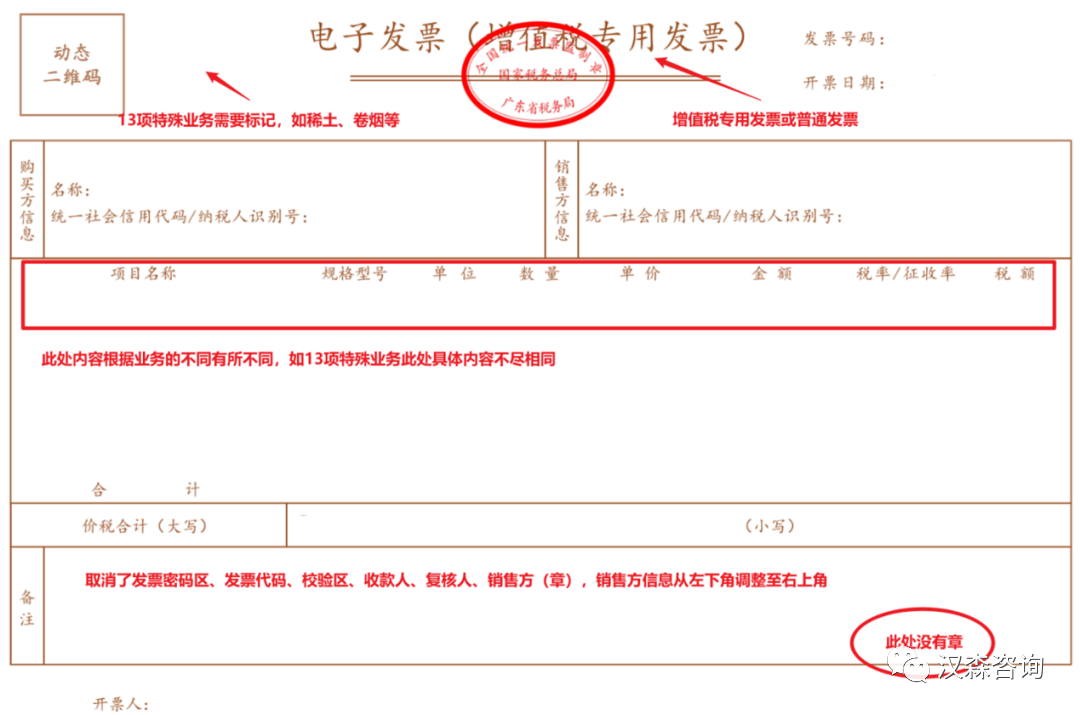
2. What is new about them?
Fully digitalised e-invoices differ significantly from the traditional VAT e-invoice (both general and special). Many people assume they are simply a renamed version of the existing electronic invoices, but they are in fact an entirely new invoice type. Key differences:
- No invoice code. Each invoice carries only a unique 20-digit number — comparable in role to an ID-card number.
- Simpler buyer-information block. Only the buyer name and tax ID are required; bank account and address are no longer mandatory.
- Larger remarks field. A significant improvement for enterprises that need to record PO numbers, material numbers, delivery-note numbers, exchange rates and similar reference data on the invoice.
- No line-item cap. Invoices no longer need to be issued with a separate schedule; the main invoice body is no longer limited to eight detail lines — convenient for enterprises that need to bill strictly against the buyer's item master, and a significant enhancement for granular financial management.
- No special tax-control device required. No invoice-type approval, no invoice requisition. Invoices are issued through the e-invoice service platform.
- Issuer-bound identity verification. The designated issuer (开票员) must complete facial-recognition authentication before each batch of invoices is issued.
- No monthly reporting or "card-clearing". The previous monthly summary reporting and special-device card-clearing steps are eliminated.
3. How to migrate to fully digitalised e-invoices
Eligibility. Fully digitalised e-invoice pilots are now live in 24 provinces and cities, including Guangzhou, Shanghai, Inner Mongolia, Sichuan, Xiamen, Qingdao, Shaanxi, Chongqing, Tianjin, Dalian, Jilin, Henan, Yunnan, Ningbo, Fujian, Shenzhen, Shanxi, Liaoning, Jiangsu, Zhejiang, Jiangxi, Hainan, Gansu and Guangxi. Enterprises in pilot regions can switch over through three channels:
- Automatic grant. Newly established enterprises are typically granted the capability automatically.
- Bureau-initiated notification. Tax bureaus are rolling out the migration in waves and will notify existing enterprises in due course. The sequence is determined by the in-charge tax bureau.
- Active application. Enterprises that wish to migrate sooner may contact the in-charge tax bureau to request inclusion in the next batch.
Preparation. Once an enterprise is in the migration queue, the exact steps vary by location, but the typical sequence is:
- Set up the invoice issuers (开票员) on the e-tax bureau.
- If within the filing period, complete the monthly reporting and tax-payment confirmation.
- Clear the legacy tax-control device ("card-clearing" / 清卡).
- Stop issuing paper invoices; clear and validate any remaining blank stock.
- Return the legacy tax-control device to the tax bureau for cancellation.
4. Financial risks and controls under fully digitalised e-invoices
Fully digitalised e-invoices are an inevitable result of the move to electronic finance. They bring genuine convenience, but finance teams must also pay attention to new risks.
For the invoice issuer
- More granular tax administration calls for more careful issuing. The "manage tax by data" (以数控税) approach relies on big data and cloud computing. Invoice data forms the foundation, and its importance cannot be overstated. When issuing invoices, the item name, unit price and quantity must reflect the underlying transaction more accurately and truthfully than ever before.
- Dynamic credit quota can constrain business operations. Tax authorities set the initial total invoice-issuance quota based on the enterprise's risk profile, tax-credit rating and actual operating conditions. The quota is subsequently adjusted dynamically using the same factors. Enterprises should pay close attention in daily operations to any outstanding tax, unfiled minor-tax items, and any tax-credit issues linked to related companies of the legal representative, all of which can lead to a quota reduction.
For the invoice recipient
-
Verification and self-check. Paper invoices are uniquely numbered, while electronic invoices can be copied and modified, creating exposure to duplicate reimbursements and forgery. Individuals and enterprises can verify invoices through the National VAT Invoice Verification Platform (https://inv-veri.chinatax.gov.cn), mobile apps, SMS, the official WeChat public account or in person. Employees can also use the WeChat mini-program "E-Invoice Duplicate-Check Tool" to identify and submit invoice details when filing reimbursements.
-
Storage and archiving. Per the Notice on Regulating the Reimbursement, Bookkeeping and Archiving of Electronic Accounting Vouchers (Caikuai [2020] No. 6) issued by the Ministry of Finance and the State Archives Administration, where an entity receives an electronic accounting voucher — regardless of whether a paper print-out is also received — it must proactively obtain the electronic-format source from the issuer. Where a paper print-out is used as the basis for reimbursement, bookkeeping and archiving, the original electronic-format voucher must also be retained. "Original electronic-format voucher" refers to the source e-invoice file and its metadata.
Therefore, both the printed copy and the electronic metadata must be delivered to the finance team. Photos, screenshots and scans are electronic copies — not the original electronic accounting voucher — and cannot alone be used as the basis for reimbursement, bookkeeping and archiving.
Fully digitalised e-invoices can be downloaded in three formats: PDF, OFD and XML.
- PDF is the most common in practice. It is essentially a preview for the recipient. Taxpayers may print the PDF and use it as the basis for reimbursement, but PDF is not the source file — and PDF does not support verification of the invoice's supervising seal and electronic signature.
- OFD looks similar to PDF, but unlike PDF it allows verification of the invoice's supervising seal and electronic signature through the "VAT e-Invoice Layout File Reader".
- XML is fundamentally different from PDF and OFD. It is a string of code that records the full metadata of the invoice.
We recommend that enterprises retain both OFD and XML for each e-invoice. Use OFD for routine reference and lookup, and XML to archive the e-invoice metadata for the same retention period as paper vouchers. Finance teams should set up folder structures on disk, USB drives or similar storage media aligned to their paper-voucher archive binders, and copy e-invoices into the corresponding folders while maintaining an e-invoice register. This will materially help in any future tax audit or external audit.
References
- Measures for the Administration of Accounting Archives (Order No. 79 of the Ministry of Finance and the State Archives Administration).
- Guidelines for the Management of Electronic Records for Enterprise Electronic Document Archiving (Dangbanfa [2015] No. 4).
- Notice on Regulating the Reimbursement, Bookkeeping and Archiving of Electronic Accounting Vouchers (Caikuai [2020] No. 6), Ministry of Finance and State Archives Administration.
Related insights
- 2026-09-09Lessons Learned from the Wesley Trust Case and the Interpretation of the New Domestic Circular No. 21
- 2026-08-27State Taxation Administration Issues Document Clarifying Collection and Administration Issues Concerning Income Tax Treatment of Enterprise Reorganization
- 2026-07-27【BREAKING】New Offshore Trust Rules